SmartOps Logo


Resources Button

Real-Time Job and Materials Tracking and Control in a Distributed Manufacturing Enterprise

A White Paper by Dr. Peter Green

AI in Box for Food Safety

Abstract

Manufacturing enterprises operating multiple plants and warehouses increasingly need near-real-time visibility into jobs, materials, and operational status across all locations. Centralized cloud-based ERP systems simplify IT management, but they can introduce reliability, response-time, and equipment-integration problems when many workers at multiple sites depend on the same remote system for barcode scanning, RFID, process control, and operational decision-making. These limitations become particularly significant when Internet connectivity or the central data center is unavailable.

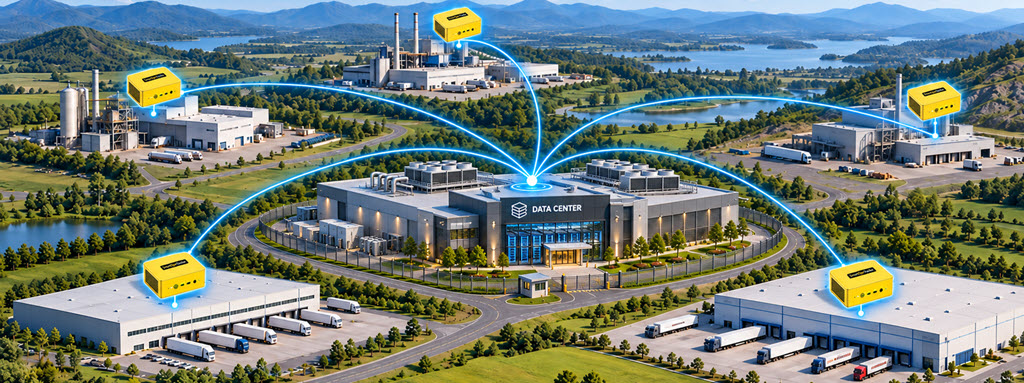
This paper examines a distributed computing alternative in which each plant or warehouse uses a local Internet of Things (IOT) computer for real-time job and materials tracking, while exchanging orders and status data with a central enterprise database through encrypted store-and-forward communications. This architecture allows local operations to continue during Internet outages, improves barcode-scanning response times, simplifies integration with local RFID and process-control equipment, and provides enterprise-wide operational visibility, although at the cost of greater initial IT complexity.

Key Take-Away Points

  1. Real-time operational data is essential for distributed manufacturing. Central planning and AI-based scheduling depend on current information about jobs, materials, and inventory at each plant and warehouse; day-old ERP data can produce poor schedules and require manual correction.
  2. Centralized cloud systems create a single operational dependency. If Internet connectivity or the central data center fails, multiple plants and warehouses can lose access to the systems needed to control and track operations.
  3. Shop-floor systems require very fast response. Barcode and RFID transactions should typically receive feedback within one or two seconds, making latency and contention in a shared central server a significant issue for larger multi-site operations.
  4. A distributed Internet of Things (IoT) architecture improves resilience and local performance. Local job and materials tracking systems can continue operating during Internet outages, provide rapid barcode response, support real-time mistake checking, and integrate directly with RFID, barcode printers, scales, and other plant equipment.
  5. There is no single best architecture; the trade-off changes with scale. Cloud-based ERP can be appropriate for small, independently operating plants, but as an enterprise expands to multiple geographically separated plants and warehouses, the balance increasingly favors a distributed computing approach despite greater initial IT complexity.

Please click here to download the PDF of
Real-Time Job and Materials Tracking and Control in a Distributed Manufacturing Enterprise.


Company Info Partner Opportunities Contact Us Recruiting History
Applications White Papers Software Videos  
Company Info Contact Us History
White Papers Software Videos
Partner Opportunities Applications   Recruiting Team Members

Copyright © SmartOpsMgt LLC 2026